



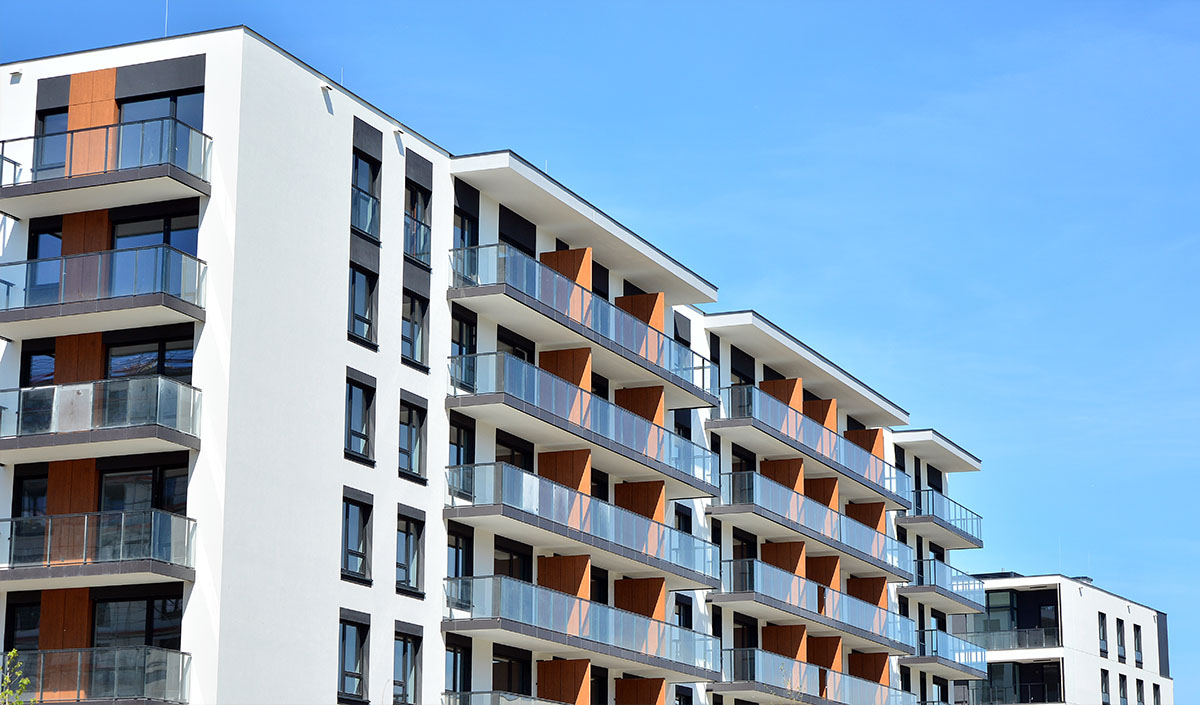
In 2024, residential renovation in Spain increased by 47% in terms of permits, according to the Spanish Council of Architects’ Associations. However, Spain’s Long-Term Building Renovation Strategy (ERESEE) states that this year we should have doubled that figure. The reality is that, although progress is being made, we are not reaching the pace we set for ourselves as a country. Spain’s renovation rate barely stands at 0.08% of the housing stock per year, far below leading countries in our environment (France 2.01%, Germany 1.49%, or Italy 0.77%).
This situation is compounded by a challenging outlook: more than eight million homes will need to be renovated by 2030 to comply with new European standards. These figures leave no room for euphemisms: if we do not accelerate, we will lose competitiveness and, above all, more families will be affected by the lack of access to affordable housing. In this context, the European Commission understands that it is necessary to renovate the housing stock and, in particular, rental housing, which has its own specific characteristics.
To promote this line of work, ASVAL has been selected to foster the energy renovation of rental housing through the INSPIRE-US project. This is no minor recognition: it places Spain—and in particular the private rental market—on the European map of scalable solutions, with real capacity to mobilise investment and improve the lives of thousands of tenants.
INSPIRE-US was created with a very specific purpose: to establish a “one-stop shop” that simplifies the renovation process for rental housing owners. In addition, one of the project’s defining features is the understanding that landlords can have a positive impact on their immediate surroundings by scaling renovation efforts to a higher level—at the building or neighbourhood scale. Why focus on rental housing? Because rental is the segment where energy inefficiency hurts the most and where its effects are most clearly felt in monthly bills. Deep renovation of rented homes reduces energy consumption, stabilises costs for vulnerable households, improves health outcomes, and extends the useful life of buildings that are currently far from European standards. Moreover, it acts as a supply lever: more efficient, higher-quality homes remain on the rental market, helping to curb the withdrawal of stock and contain price pressures. And no less importantly, it accelerates the residential sector’s contribution to the EU’s climate objectives.
The good news is that the tools already exist. NextGenerationEU funds have shown that, when there is clarity of objectives and a well-designed incentive framework, activity accelerates rapidly: in 2024 we already saw very significant increases in renovation permits, and European subsidies cover between 40% and 80% of renovation works, depending on the type of intervention. However, a real change of pace requires more than one-off subsidies; it calls for organisation, scale, and professionalisation. In short, it calls for solutions like INSPIRE-US. That said, there is no time to lose. The new European Directive on the energy performance of buildings sets a demanding path for the next decade and pushes Member States to accelerate the renovation rate of their building stock. Spain, with one of the oldest and least energy-efficient housing stocks, cannot settle for a 0.08% annual rate: we need to multiply that pace tenfold if we want to move closer to the standards already achieved by countries such as France or Germany.
Europe, for its part, is taking action. The appointment of a specific “Housing” portfolio, the creation of the Housing Task Force, and the Affordable Housing Initiative open a window of opportunity to align funding, technical assistance, and public-private collaboration frameworks. Spain must be at the forefront of this agenda, contributing success stories and calling for a revision of aid frameworks that allows private investment and well-renovated affordable housing to scale up in a sustained way.
INSPIRE-US is, in this sense, one piece of a much broader puzzle. It demonstrates that property owners, renovation agents, managers, technicians, financiers, and public administrations can sit at the same table, share data, and reduce bureaucratic burdens without compromising the rigour of interventions. In other words, it is not about reinventing the wheel, but about making it turn faster.
“We are making progress in renovation, but we are not reaching the pace we set for ourselves as a country.”
— Helena Beunza, President of ASVAL
We want to demonstrate that renovating the rental housing stock is possible when friction is reduced and smart incentives are put in place. To those who have doubts, I would say two things. First, the cost of inaction is greater than the cost of renovation. Continuing to maintain inefficient housing is a silent tax on our families and our cities. Second, there is already evidence that when incentives are aligned, renovation accelerates. Spain has experienced this with European funds; Europe has seen it in markets with renovation rates of 1.5% to 2% per year. Spain has much at stake over the next five years. Let us ensure that, when we look back, we can say we seized the opportunity. That we moved from intentions to results. That we truly promoted a more efficient, more accessible, and fairer rental housing market.
INSPIRE-US is a decisive step in that direction. It will not be the only one, but it can help set the change of pace that Spain needs. It is up to all of us to rise to the challenge.

Helena Beunza
President of Asval
About ASVAL
The Association of Rental Housing Owners is the leading organization in Spain representing landlords in the residential rental sector, both institutional and private. Founded in 2020, ASVAL brings together developers, specialized managers, individual owners, and other key players in the rental market, with the aim of promoting a legal, economic, and social environment that supports an accessible, stable, and high-quality housing supply. ASVAL works to advance effective public policies, foster cross-sector dialogue, and advocate for a regulatory framework that acknowledges rental housing as an essential part of the housing system.